


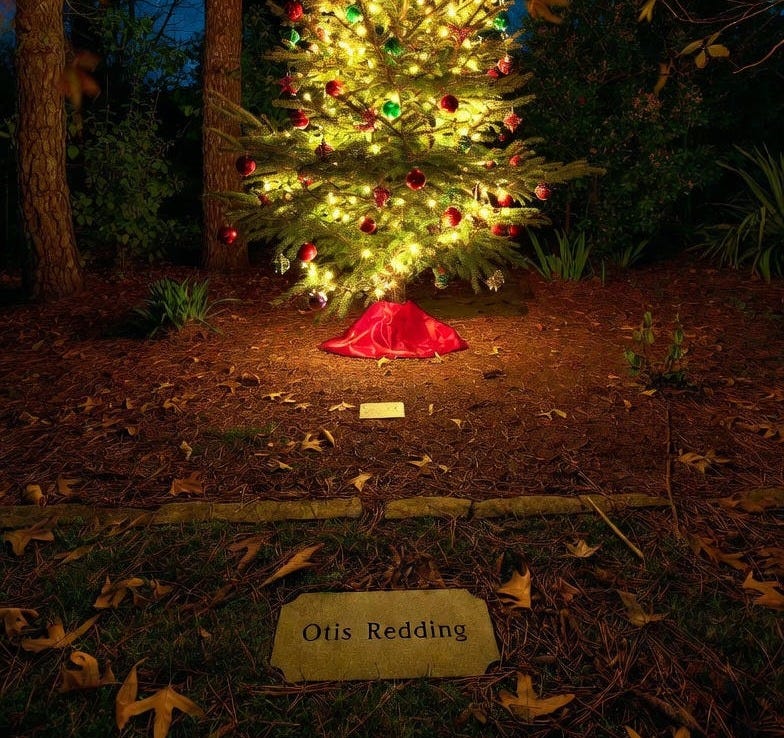
During the Christmas season, nothing can stop a dinner table conversation like political banter. One of the remaining topics where people can argue, but still be mostly cool is when discussing “the best song for Christmas.” People have STRONG opinions on the song that best portrays their Christmas experience: Mariah, Bing, Frank, Bublé, Darlene, Petty, Springsteen, the Eagles, and every Christmas hymn are all good options. But. here’s why I think this one reigns supreme.
Christmas morning, December 2025, and our house is alive with the usual chaos. The boys are tearing into gifts, my husband is belting out carols, and I’m trying to keep the dog from stealing a stray ornament or piece of wrapping paper. Amid the wrapping paper avalanche, someone queues up holiday tunes on the speaker. When I get to play Otis Redding’s soulful “White Christmas,” the room quiets for a moment. It’s not the sparkly, feel-good version most people expect, it’s raw, aching, full of longing. That’s what stops me every year. Have you ever stopped to ask yourself why the holidays feel both joyful and heavy at the same time?
What if the song that truly captures Christmas isn’t the one that promises perfection, but the one that admits life is complicated?
My Holiday Mix: Family, Memories, and the Real Stuff
Our family doesn’t do picture-perfect holidays. As two dads raising two adopted almost teenage sons, we’ve built our traditions from scratch. The boys came to us with stories that make “normal” Christmases feel foreign; we’ve worked hard to create new memories without erasing the old ones. This year, with inflation biting into budgets and gift expectations running high, we focused on presence over presents. We baked cookies together, played board games until late, visited family in SC and OH, and shared stories from the past year. But there’s always that undercurrent, missing people who aren’t here, navigating family dynamics, feeling the weight of making everything “right.” Otis Redding’s version lands perfectly because it doesn’t hide the ache. It lets joy and sorrow share the same space.
From Wartime Dream to Soulful Truth: The Song’s Journey
Irving Berlin wrote “White Christmas” in the early 1940s, and Bing Crosby’s smooth, nostalgic delivery turned it into an instant classic during World War II. Released in 1942, it became the best-selling single of all time, with over 50 million copies sold, offering homesick soldiers and families a vision of peace and home. Crosby’s velvety baritone evoked an idealized snowy holiday, safe, sentimental, and almost untouchable.
Then came Otis Redding in 1967. Recording just before his tragic plane crash on December 10th that year, Redding transformed the song into something deeper. Released posthumously in 1968, his version reached No. 12 on the Christmas Singles chart. The horns wail like a quiet lament, the tempo drags with deliberate emotion, and his voice carries the weight of longing. Against the backdrop of civil rights struggles and national exhaustion, it became more than nostalgia… it became a prayer.
For contrast, here’s Bing Crosby’s classic take, polished and dreamy:
And Otis Redding bringing his soul to it:
Fans call it “the greatest Christmas song of all time” for a reason, Redding pours everything into it, turning wistful lyrics into something profoundly human.
Why Otis Hits Different: The Emotional Depth
Redding’s “White Christmas” isn’t about escaping reality; it’s about facing it. The slow build, the raw vocal cracks, the way he lingers on “dreaming,” it captures the tension many feel during the holidays: missing loved ones, reflecting on tough years, still choosing hope. Reviews highlight how his delivery makes the song feel urgent and true, as if he’s singing from personal experience.
This resonates today. In 2025, holiday stress is real: surveys show 57% of Americans find the season stressful, with financial pressures, family dynamics, and loneliness topping the list. Economic reports note inflation driving up costs, yet spending remains resilient, people prioritize connection over perfection. Redding’s version reminds us that joy doesn’t require erasing the hard parts; it coexists with them.
My unCommon Sense
Mainstream holiday culture sells a fantasy: everything must be merry, shiny, and stress-free. But that narrative ignores real life, economic strain, family complexities, the quiet grief that surfaces when the lights are brightest. Otis Redding challenges that by embracing the full spectrum. His song promotes personal responsibility: own your feelings, choose connection, build meaning on your terms.
In our family, this means setting boundaries around traditions, focusing on what matters (time together, not extravagance), and giving ourselves permission to feel it all. It’s empowering, reject the pressure to perform happiness, embrace authentic joy. That’s real liberty: deciding how the season serves you, not the other way around.
On Christmas Day 2025, as the wrapping paper settled and the house got quiet, Otis Redding’s “White Christmas” plays. It doesn’t demand cheer; it offers solidarity. For families like ours, blended, non-traditional, full of second chances, it feels like truth. Joy and sorrow can share the room. You can miss what’s gone and still love what’s here.
The best Christmas song isn’t the one that drowns out reality… it’s the one that honors it. Bing gave us the dream; Otis gave us the prayer.
If you want to have a constructive conversation about this or anything else, message me at dan@thrailkill.us, and let’s grab coffee or a beer.
Have a good one,
Dan
Thank you for bringing this song to our family tradition and for writing so eloquently what it means to us even if we hadn’t realized it yet.